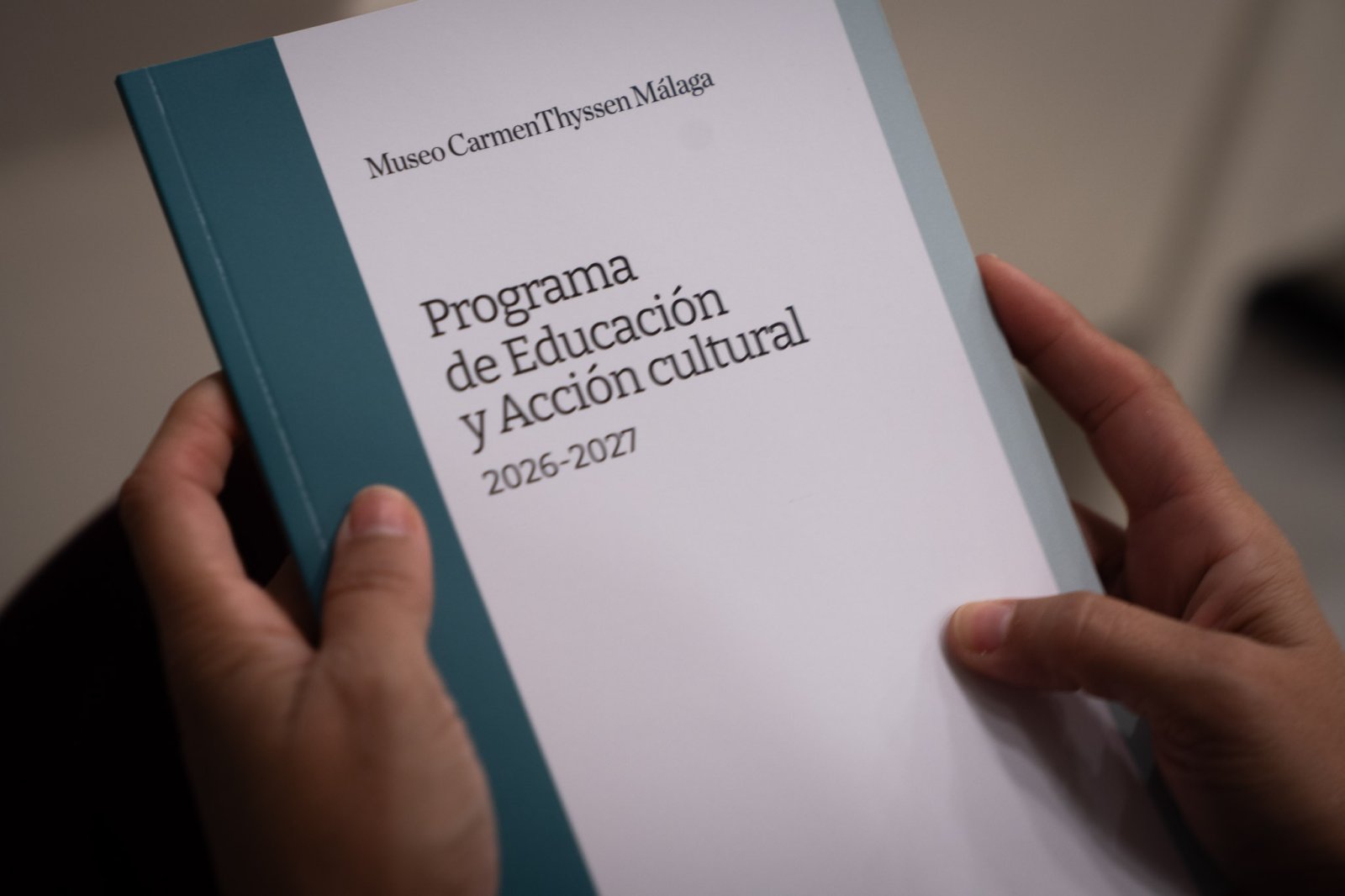
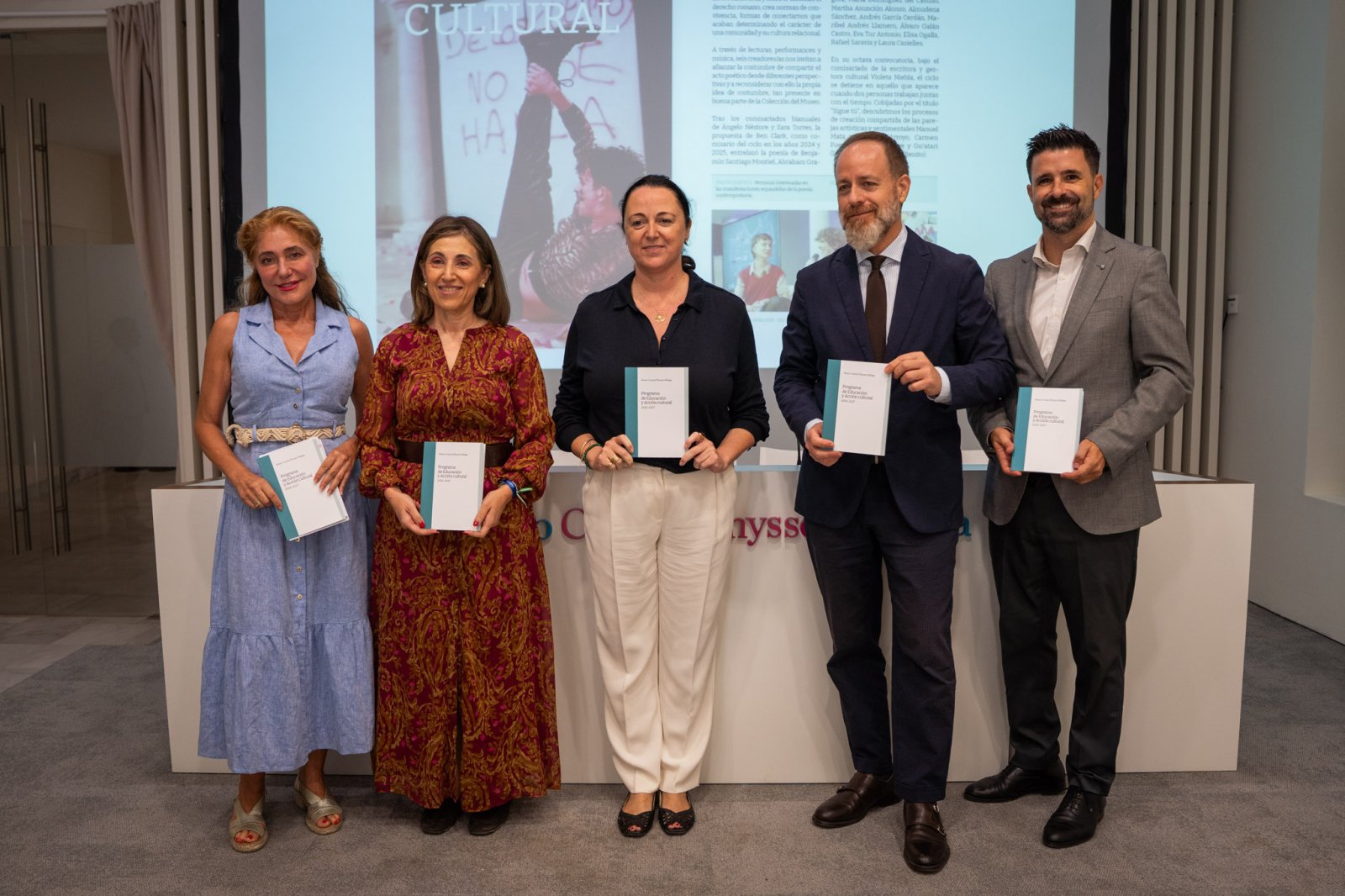
The Carmen Thyssen Málaga Museum has presented the Education and Cultural Action Programme for the 2026-2027 academic year, which incorporates for the first time activities at the Roman archaeological site of the Palacio de Villalón and a new sound project with Red Planea.
FJCG
·
Photo: Ayuntamiento de Málaga
The Museo Carmen Thyssen Málaga has presented the Education and Cultural Action Programme for the 2026-2027 academic year, prepared once again with the collaboration of the Fundación «la Caixa». The programme is organised into six sections according to the audiences it addresses: educational centres, specific communities, families, talks and conferences, co-laboratories and cultural action. It can be downloaded in the Education section of the museum's website.
New features for educational centres
Registration for activities aimed at Infant, Primary and Secondary groups will run until May 28, 2027. This year's titles are «Un ser vivo», for Infant and the first cycle of Primary; «Tenemos derecho», for the second and third cycles of Primary; and «Somos lenguaje», for Secondary, Bachillerato and Intermediate Vocational Training Cycles.
As a new feature, «Todo cambia» is added, a visit to the Roman archaeological site located beneath the Palacio de Villalón, aimed at ESO, Bachillerato and Intermediate Vocational Training Cycle students, with a tour supported by digital devices about the life, trade and industry of Roman Malaca.
«Derivas sonoras en el Museo Carmen Thyssen Málaga» also premieres, a project in collaboration with Red Planea that works through participatory co-creation to link the museum's collections with Education for Sustainable Development and Human Rights. Registration for this project is open until October 15 through a form at redplanea.org.
The programme also maintains, free of charge, working tools for teachers and the possibility of self-guided visits with students.
Communities, families and leisure time
From October 14, activities aimed at specific communities will open, including «Idas y vueltas», dialogued visits for adults in vulnerable situations and adapted visits for people with functional diversity. People over 60 will have «Voces de la memoria», which this year is titled «Nuestra casa».
«Correspondencias» reaches its twelfth edition with the AFENES association and the Mental Health Unit of the Hospital Regional Universitario de Málaga, while «Laboratorio de vuelos» reaches its fifth edition alongside the Eating Disorders Unit (TCA) of the same hospital. «Realidades» and «Mapas», the latter linked to the Comisión Española de Ayuda al Refugiado (CEAR), continue as projects aimed at families with minors with autism spectrum disorder and at adults awaiting asylum.
For weekends and holidays, family proposals are offered such as «Bebecuentos», «Iniciación musical», «Familias Olé tú» and the new «Familias al yacimiento», alongside activities for boys and girls aged 6 to 12 such as «Arte en movimiento», «Museo de Navidad», «Museo de Semana Blanca» and «Museo de Verano».
Talks, co-laboratories and cultural action
The «Otras miradas» series will dialogue with the permanent collection, and a lecture programme is being prepared linked to the temporary exhibition «¡Olé! El mito de lo español a través de Andalucía», which opens on Saturday, October 3.
In April 2027, «EducaLab» will be held, a space for reflection for teachers and educators focused this year on the impact of artificial intelligence and the use of social media in adolescence. During January, February and March 2027, the creation workshop «El cuerpo en el centro» will take place, aimed at educators and mothers and fathers.
In the cultural action section, the series «Costumbre», now in its eighth edition dedicated to poetry, and «Tangentes. Experiencias de danza y performance», in its sixth edition, continue. From October the museum will host the four shows of the seventh Artes Vivas call, titled «Identidades»: «Juancaballo», by the Compañía Juan Berlanga; «Los nombres que tuve», by Ángela Vizán, Chechu Gómez and Miguel Pimentel; «Opus», by the Compañía La Taimada; and «Copla: un cabaret español», by the Compañía HisPanic.