
Estepona expands pine processionary treatments to more than 3,000
Estepona Town Council has closed the annual campaign against the pine processionary caterpillar with 240 more applications than the previous year.
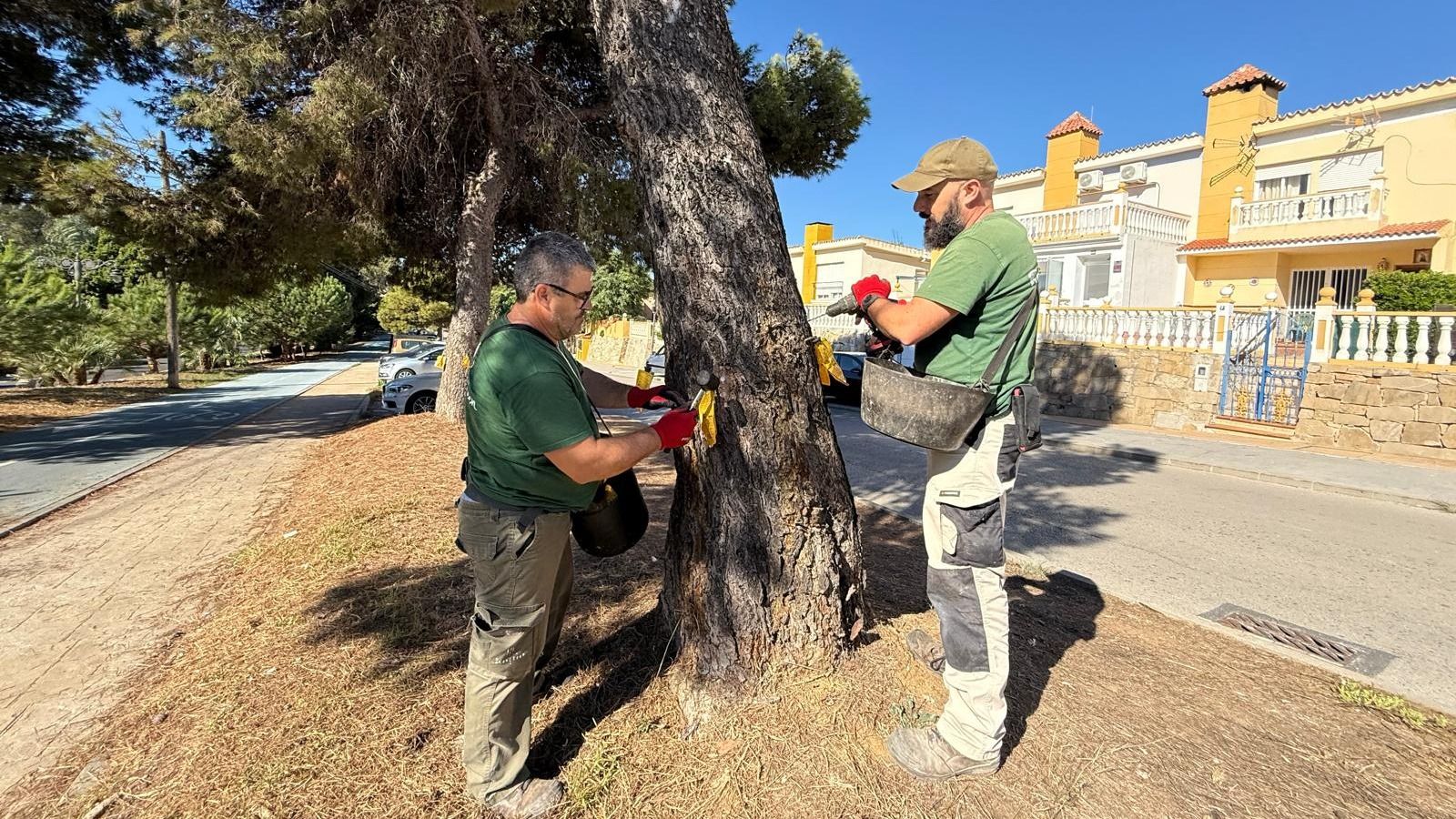
Estepona Town Council has finished the campaign to eliminate the pine processionary caterpillar from the city's pine trees, which this year has been extended to more areas. According to the Council, more than 3,000 treatments have been applied, compared with the usual 2,800, which means 240 more applications than in previous campaigns.
Where work has been carried out
The work has focused on public parks, large pine woodland areas, the surroundings of schools and green areas. The expansion has made it possible to include the specimens in Parque de la Hermandad and the area around the Cancelada football pitch. Three applications have been administered to each specimen, although in the large pine trees up to five have been supplied.
A public health problem
The Council explains that the pine processionary is Spain's leading forest pest and opens the way to other opportunistic pests. In addition, the caterpillar and its urticating hairs are a public health problem, as they cause rashes and severe allergic reactions, and they also affect pets. In trees, the insect seriously damages the foliage and weakens them.
Endotherapy treatment
The products are applied through endotherapy, an alternative method of phytosanitary treatment of urban trees with low environmental impact. The Council notes that it is quick, simple and does not require investment in machinery, so it also saves on water and energy consumption. The best strategy against the pest is preventive treatment from the beginning of October, included in the annual phytosanitary calendar of the municipal green areas. The protocol is managed and supervised by a phytosanitary advisor, who draws up the annual calendar and the prior advisory document.
Breaking news from News, on your phone
An alert only when something can't wait. Free, no account needed.
On iPhone, alerts only arrive if you first add InforMálaga to your Home Screen. How to do it, step by step
This browser can't receive alerts. Try another one, such as Chrome or Safari.
You've blocked alerts from InforMálaga in this browser. You can turn them back on in its settings. How to do it, step by step
Only what can't wait. Change or remove it in my alerts