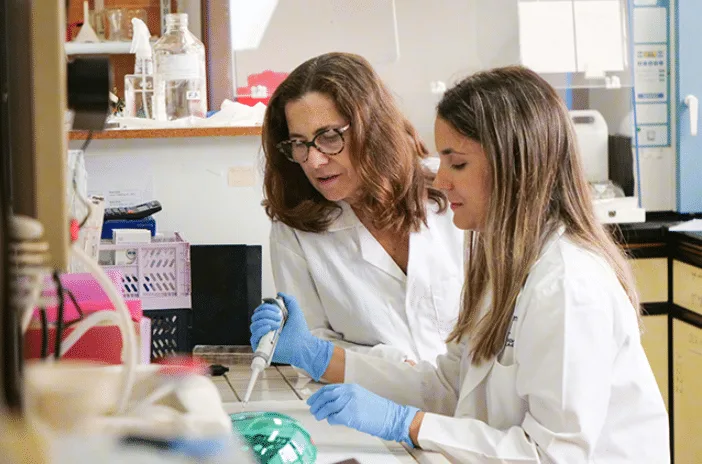
Researchers from the University of Málaga and IBIMA Plataforma BIONAND lead an international study showing that a traumatic brain injury changes the hypothalamus's reaction to later stressful situations, with more inflammation and anxiety and avoidance behaviors.
A traumatic brain injury caused by a strong blow to the head can change the way the brain responds to stressful situations that occur afterwards. This is the conclusion of an international scientific team led by researchers from the Department of Cell Biology, Genetics and Physiology of the University of Málaga (UMA) and IBIMA Plataforma BIONAND, in collaboration with the Wexner Medical Center of Ohio State University (Columbus, United States).
What changes in the brain
The study has found that the hypothalamus, the small region located at the base of the brain that connects the nervous system with the endocrine system and directs the body's response to stress, reacts differently after the injury. Specifically, it triggers its inflammation, something that is accompanied by anxiety and avoidance behaviors.
The research has so far been carried out only in animal models and has analyzed the consequences of acute stress episodes in contexts of aggression and social defeat. The results have been published in the scientific journal "Brain Behavior and Immunity".
Immune memory of cells
According to UMA scientist María Dolores López, one of the authors of the work, a prior trauma can generate subtle changes, practically undetectable, at the cellular and molecular level, but which persist over time and can later alter behavior in the face of unforeseen stressful situations.
The expert notes that microglial cells, largely responsible for the neuroinflammation associated with trauma, play an important role in the observed consequences. The research suggests that, after the injury, these cells acquire immune memory and become sensitized, which leads to intensified activation in the face of future stressors. "This is reflected in changes in cell morphology and in a greater production of inflammatory mediators," López states.
No more cortisol in blood
Another of the findings has been to verify that these brain alterations do not translate into a greater rise in cortisol in blood. That is, the brain seems to react differently to stress even though the systemic hormonal response is not greater.
The study was part of the thesis of UMA researcher Ana Léon, who completed a stay in the laboratory of Professor Jonathan P. Godbout, of the Wexner Medical Center, co-author of the work. The results align with clinical data indicating endocrine alterations in patients with trauma and point to a possible mechanism in which the hypothalamus and microglia could play a relevant role.
Share this story
Breaking news from News, on your phone
An alert only when something can't wait. Free, no account needed.
On iPhone, alerts only arrive if you first add InforMálaga to your Home Screen.
How to do it, step by step
This browser can't receive alerts. Try another one, such as Chrome or Safari.
You've blocked alerts from InforMálaga in this browser. You can turn them back on in its settings.
How to do it, step by step