CEM and CaixaBank discuss the use of artificial intelligence in occupational risk prevention
Business people, academics and professionals analyzed in Málaga how data and artificial intelligence can help anticipate occupational risks, without replacing the judgment of prevention professionals.
Redacción · Published on September 21, 2026
The Confederación de Empresarios de Málaga (CEM) and CaixaBank held this Monday the session «Datos, IA y prevención: nuevas formas de anticipar riesgos en la empresa», a gathering aimed at business owners and professionals to analyze how data and artificial intelligence (AI) can support the prevention of occupational risks.
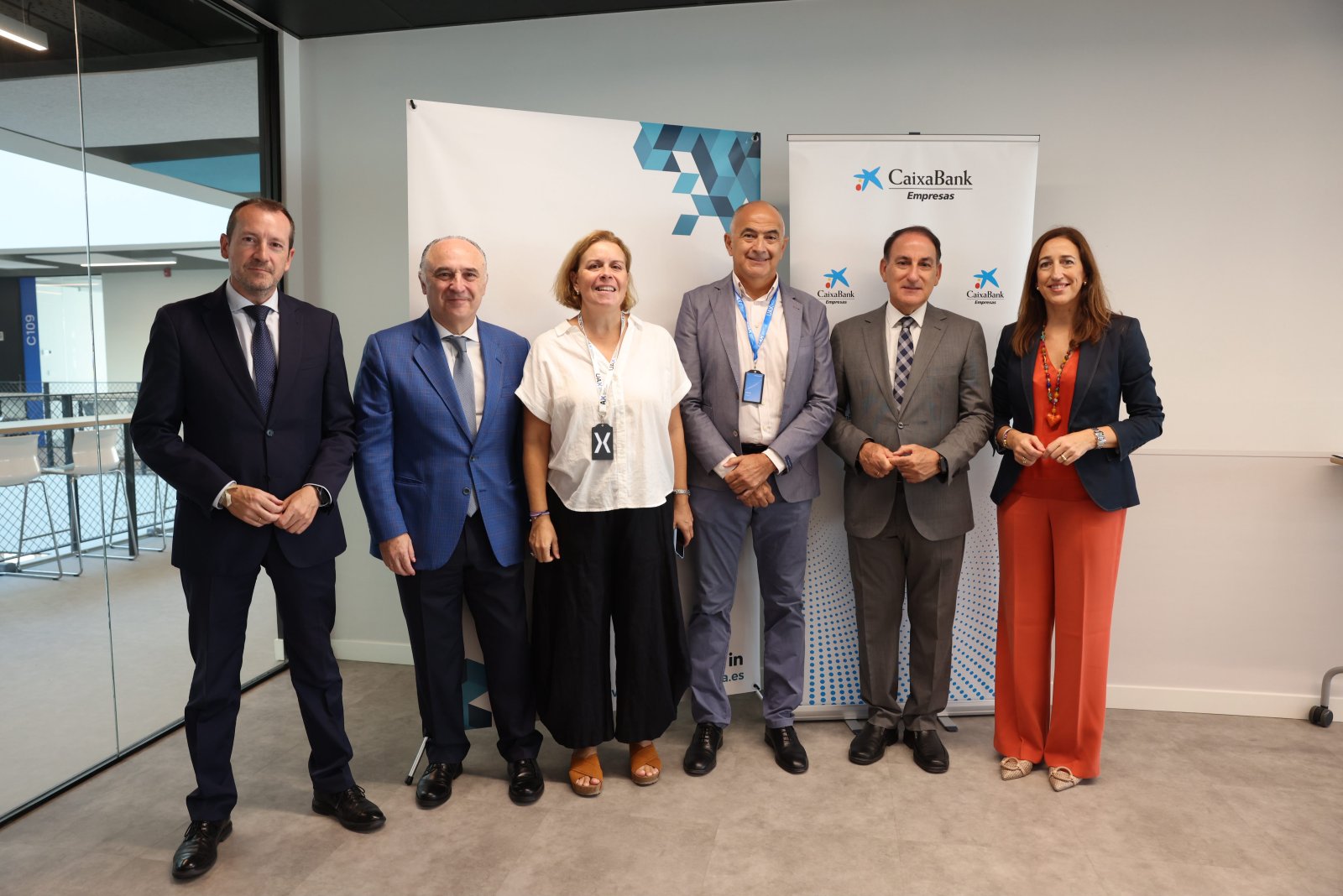
The activity took place at the Campus Mare Nostrum of the Universidad Alfonso X el Sabio (UAX) in Málaga. Taking part in the opening were Rafael Ceballos, vice-rector for Operations and dean of the Faculty of Health and Sport of UAX Mare Nostrum; Javier González de Lara, president of CEM and of the Confederación de Empresarios de Andalucía (CEA), and Juan Ignacio Zafra, territorial director for Andalucía at CaixaBank.
According to the organizers, real-time data analysis, artificial vision, connected devices or predictive models already make it possible to explore applications capable of detecting risk situations, analyzing patterns based on accidents and incidents, adapting preventive training to specific job positions or making the work of specialized professionals easier. During the debate it was pointed out that these tools must always keep professional judgment and people's experience at the center of decision-making, without replacing them.
González de Lara stated that «prevention of workplace accidents is a collective task. It involves all of us, beyond regulatory compliance, putting technology at the service of people». The president of CEM also called for analyzing occupational accident rates rigorously, distinguishing the different types of accidents and their causes, and noted that this effort must involve «companies, workers, administrations and society as a whole».
For his part, Zafra stressed the importance of data quality before applying AI: «Artificial Intelligence can help us prevent, but first we have to do our homework with the data. Data comes before AI: it has to be properly supplied, organized and managed so that technology can offer us useful and reliable information». He added that «the problem is not technology, but the use we make of it. We have to give humanity to technology, because when we talk about risks, the level of decision must remain human and people have to be at the center».
Talk and round table
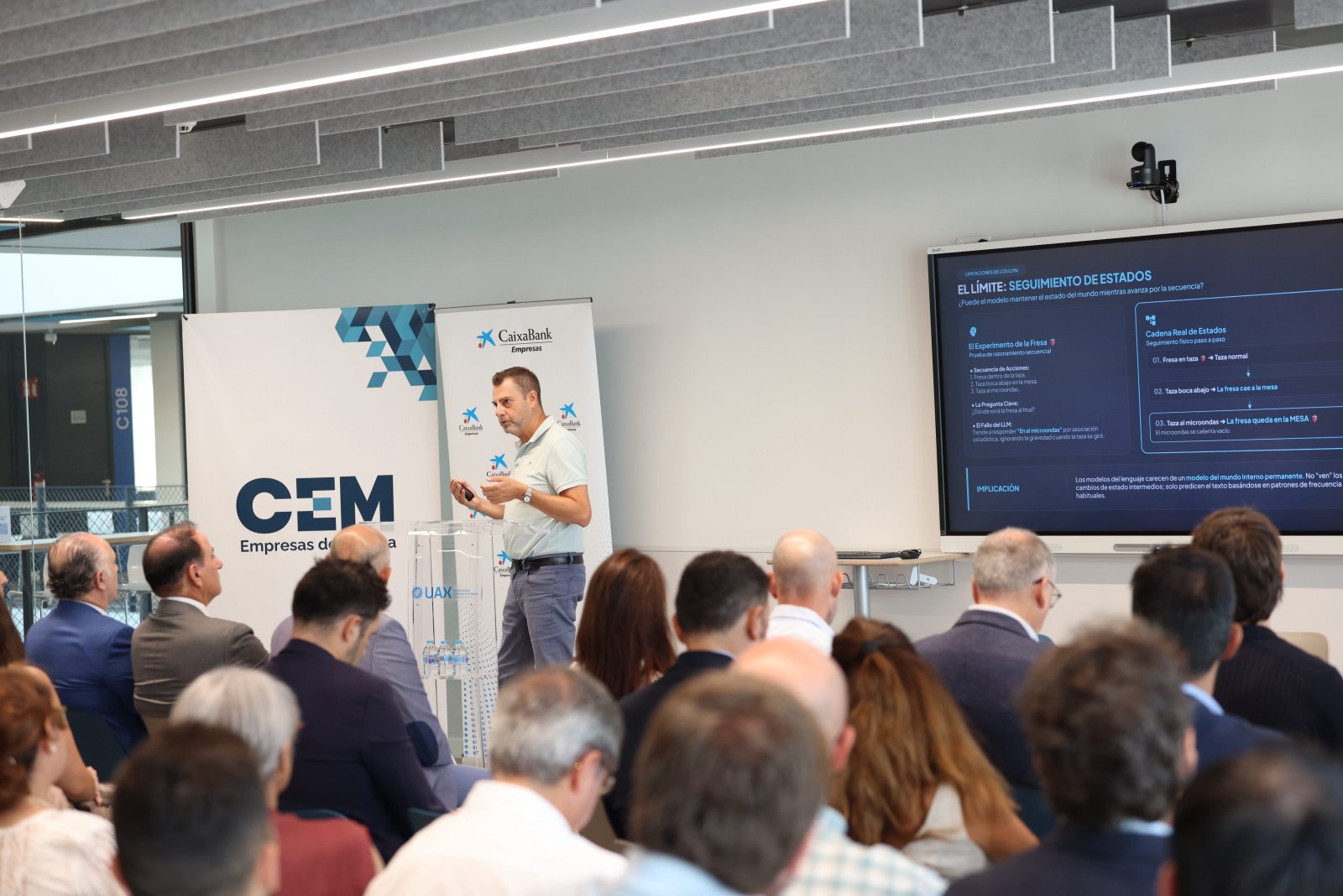
After the institutional opening, Joan Carles Aguilar, Director of Innovation at Vitaly, delivered the talk «El Paradigma AI-First: Hacia una Prevención Líquida e Inteligente en Tiempo Real», focused on the potential of AI and data analysis for preventive models with greater anticipation capacity.
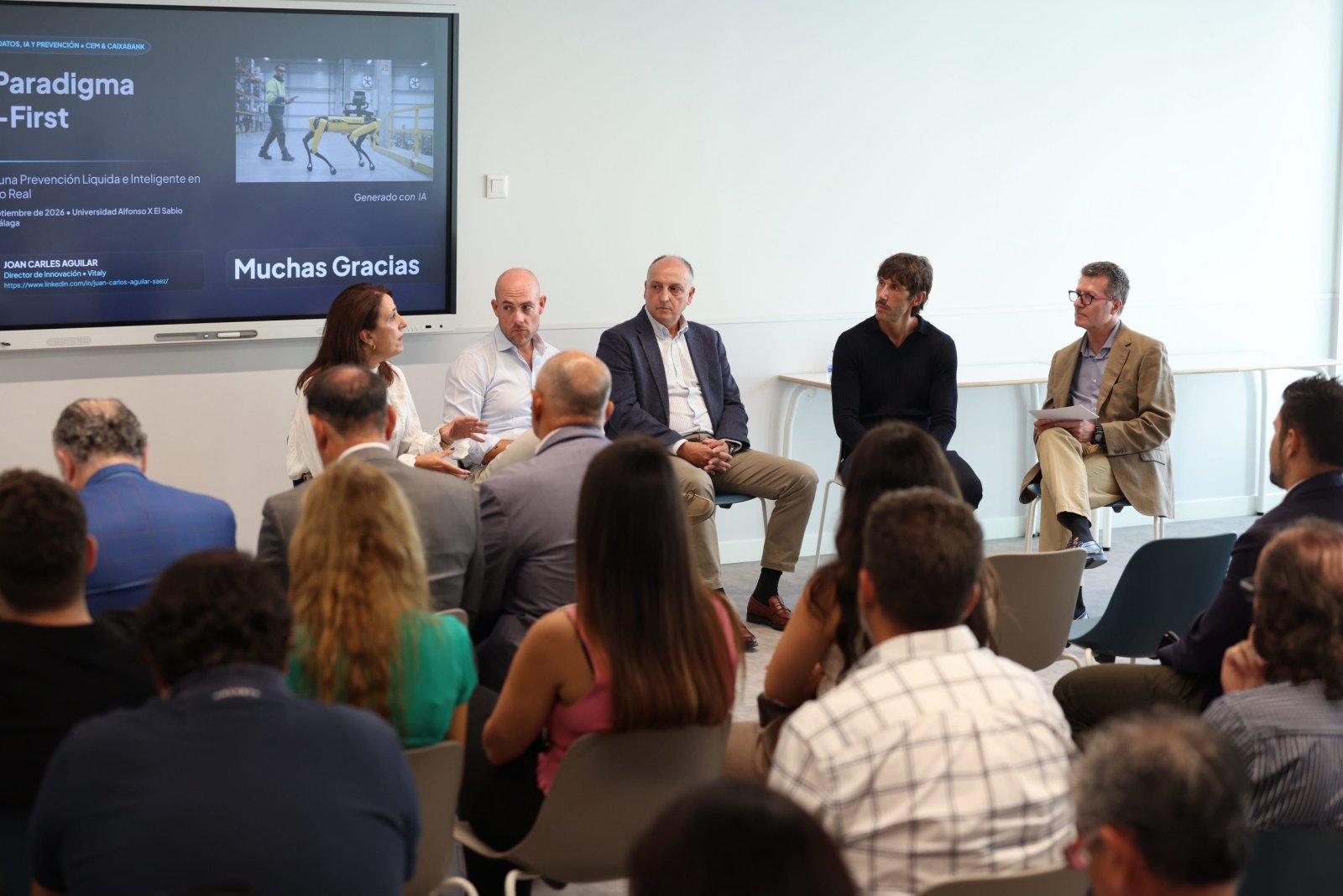
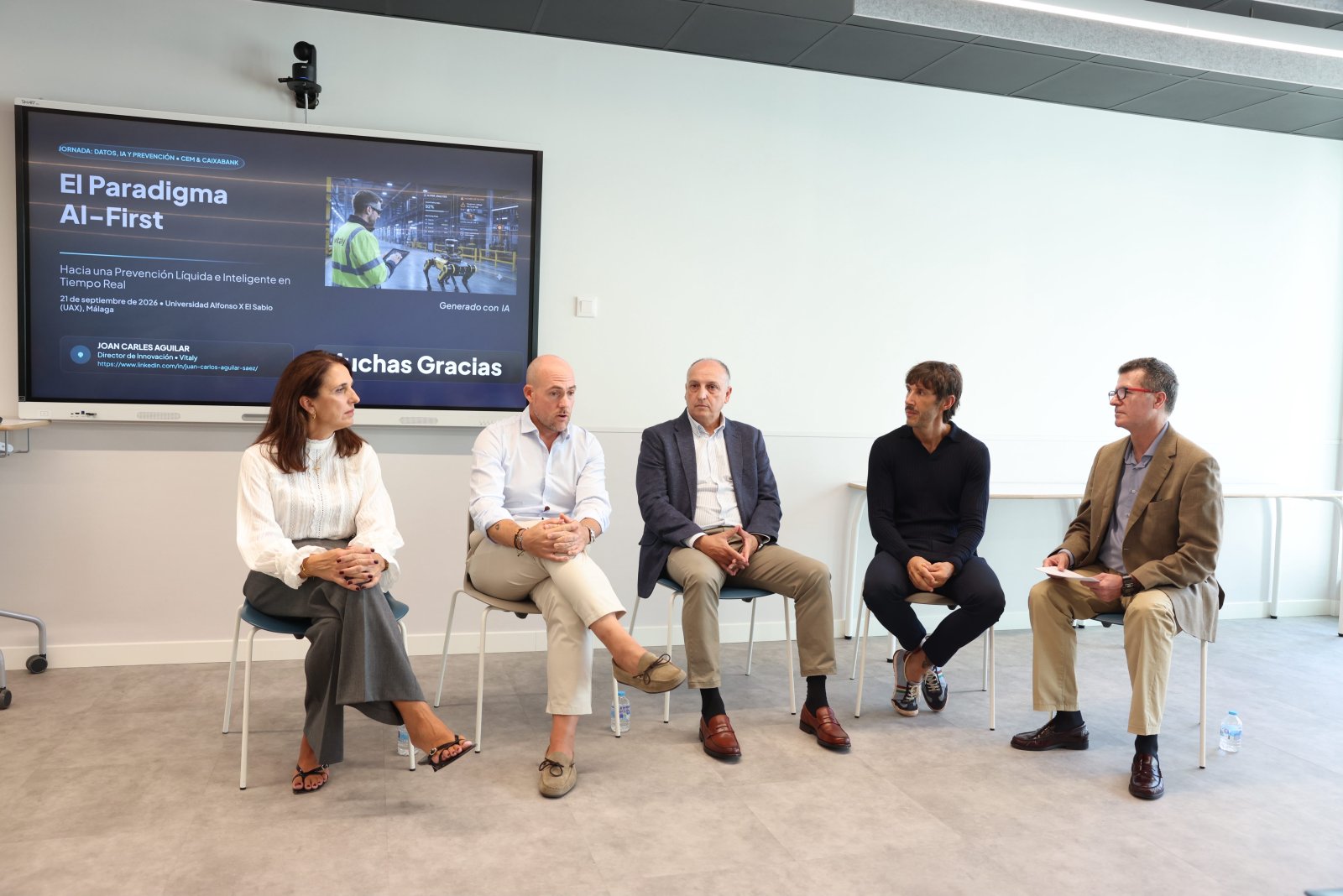
The session continued with a business and academic round table featuring María Teresa López Cid, from VidaCaixa; Alejandro González, CEO and founder of Taalentfy; José Ignacio Peláez, professor of Computer Science and AI researcher at the Universidad de Málaga, and Rafael Saucedo, head of studies of the Degree in Business Analytics and the Master's in Big Data at UAX. The table was moderated by Félix Infante, head of the Business Services Department of CEM, and addressed specific AI applications and the challenges of its responsible incorporation into the field of prevention.
The activity took place at the Campus Mare Nostrum of the Universidad Alfonso X el Sabio (UAX) in Málaga. Taking part in the opening were Rafael Ceballos, vice-rector for Operations and dean of the Faculty of Health and Sport of UAX Mare Nostrum; Javier González de Lara, president of CEM and of the Confederación de Empresarios de Andalucía (CEA), and Juan Ignacio Zafra, territorial director for Andalucía at CaixaBank.
According to the organizers, real-time data analysis, artificial vision, connected devices or predictive models already make it possible to explore applications capable of detecting risk situations, analyzing patterns based on accidents and incidents, adapting preventive training to specific job positions or making the work of specialized professionals easier. During the debate it was pointed out that these tools must always keep professional judgment and people's experience at the center of decision-making, without replacing them.
González de Lara stated that «prevention of workplace accidents is a collective task. It involves all of us, beyond regulatory compliance, putting technology at the service of people». The president of CEM also called for analyzing occupational accident rates rigorously, distinguishing the different types of accidents and their causes, and noted that this effort must involve «companies, workers, administrations and society as a whole».
For his part, Zafra stressed the importance of data quality before applying AI: «Artificial Intelligence can help us prevent, but first we have to do our homework with the data. Data comes before AI: it has to be properly supplied, organized and managed so that technology can offer us useful and reliable information». He added that «the problem is not technology, but the use we make of it. We have to give humanity to technology, because when we talk about risks, the level of decision must remain human and people have to be at the center».
Talk and round table
After the institutional opening, Joan Carles Aguilar, Director of Innovation at Vitaly, delivered the talk «El Paradigma AI-First: Hacia una Prevención Líquida e Inteligente en Tiempo Real», focused on the potential of AI and data analysis for preventive models with greater anticipation capacity.
The session continued with a business and academic round table featuring María Teresa López Cid, from VidaCaixa; Alejandro González, CEO and founder of Taalentfy; José Ignacio Peláez, professor of Computer Science and AI researcher at the Universidad de Málaga, and Rafael Saucedo, head of studies of the Degree in Business Analytics and the Master's in Big Data at UAX. The table was moderated by Félix Infante, head of the Business Services Department of CEM, and addressed specific AI applications and the challenges of its responsible incorporation into the field of prevention.