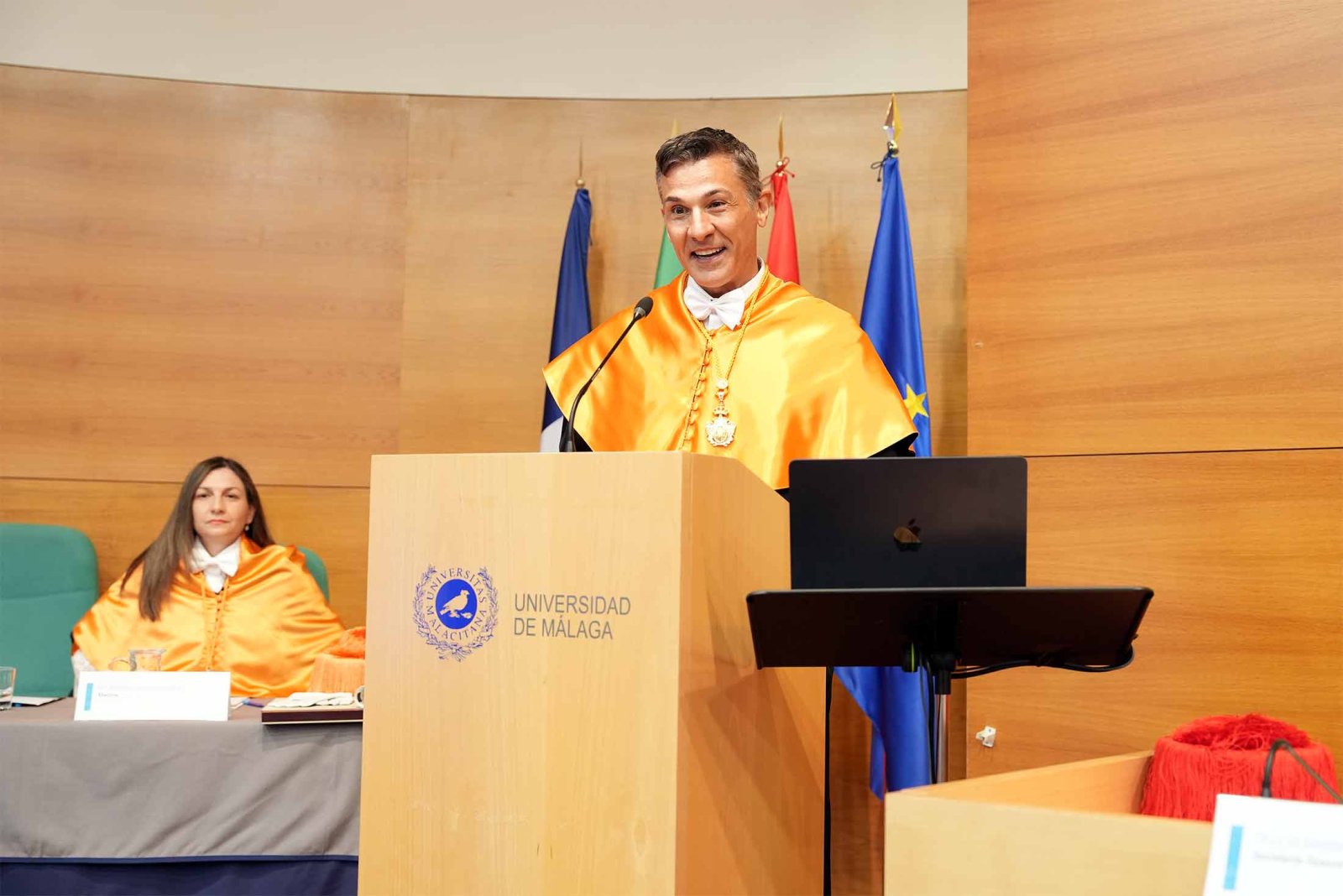
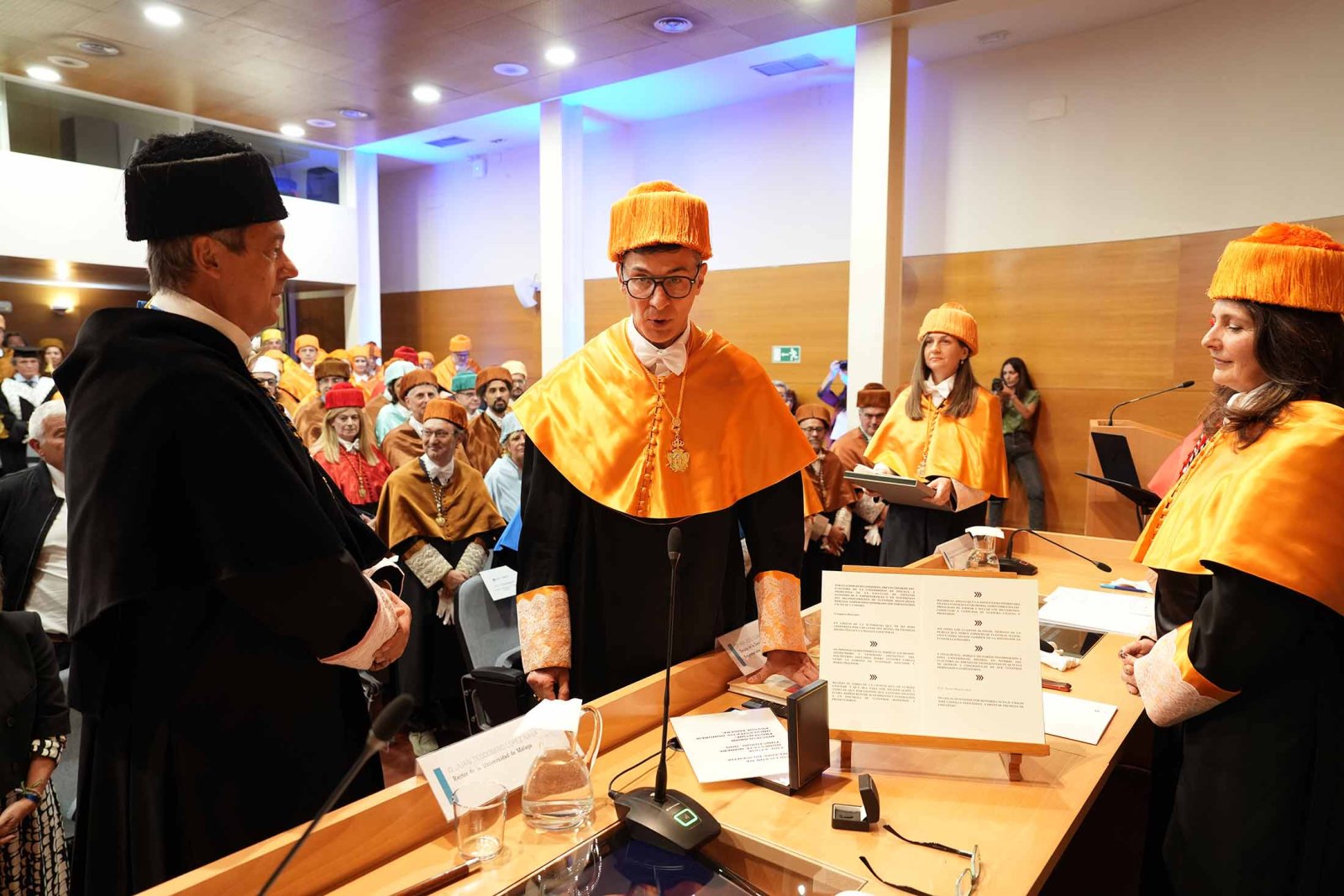
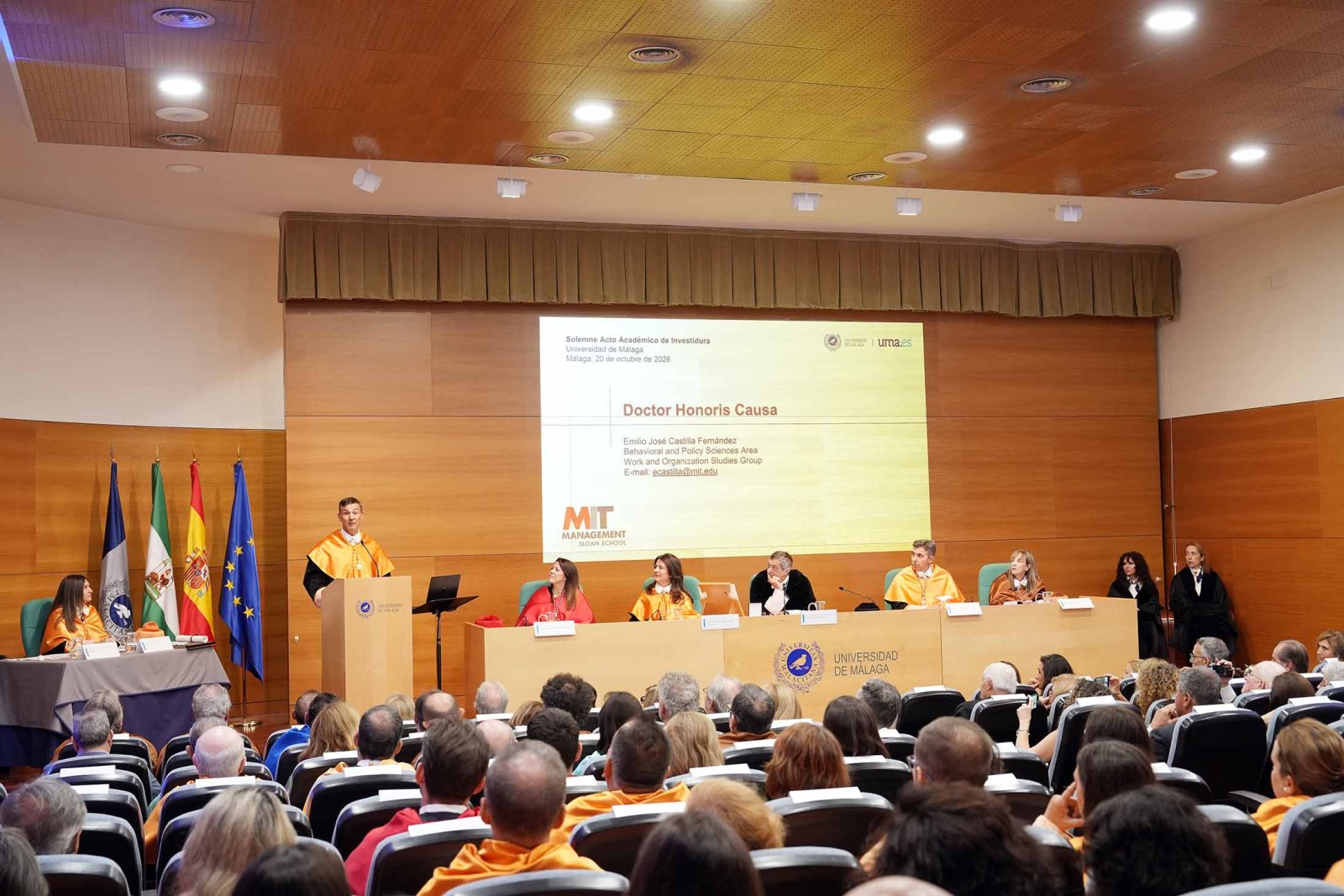
The MIT professor Emilio José Castilla Fernández warns that algorithmic hiring systems reproduce biases from the past and proposes training and supporting people without giving up excellence, at the event where he received the honorary doctorate from the University of Málaga.
Redacción
·
Photo: Universidad de Málaga · Sala de prensa
The economist and sociologist Emilio José Castilla Fernández is now an honorary doctor by the University of Málaga (UMA). The Massachusetts Institute of Technology (MIT) professor received the institution's highest academic distinction on Tuesday, October 20, at a solemn ceremony presided over by the rector, Teodomiro López, according to the university.
An "opportunity mindset"
In his acceptance speech, Castilla argued that decisions about people's careers should be based on effort, abilities and contributions, and not on gender, race, social origin or contacts. Against what he calls the "best talent mindset", focused on attracting and retaining the best, he proposed an "opportunity mindset", which bets on training and supporting people without giving up excellence.
The new doctor warned that algorithmic hiring systems "are not eliminating prejudices and biases, but reproducing patterns inherited from the past". His research is grouped into three lines: networks and social capital in work contexts, quantitative methods and longitudinal analysis, and inequality and meritocracy. The "meritocracy paradox" falls under the latter, with which he shows that organizations can reproduce inequalities even when they adopt explicitly meritocratic systems. His book The Meritocracy Paradox (Columbia University Press) has received the Nautilus Book Award and the George R. Terry Book Award from the Academy of Management.
Link with Málaga
Castilla first came to the UMA in 2008 to work on research methodology with doctoral and master's students, and returned in 2009 and in 2019, when he gave the inaugural lecture of the Master's in Applied Sociology. He is part of the Advisory Council of the Centre for Applied Social Research (CISA) and has given lectures to undergraduate, master's and doctoral students. Málaga, he said, occupies "a very special place in my academic and personal geography".
The sponsor of the event was the professor of the Department of Business Organization and Marketing of the UMA Cristina Quintana García, who highlighted his scientific career and his Andalusian roots, since his parents come from the Alpujarra granadina. The rector linked Castilla's research on merit and inequality with the role of the university as a place where someone can "sit down, learn, grow and contribute".
Career
Born in Badalona in 1972, Castilla graduated in Economic Sciences from the Universitat de Barcelona in 1995 and earned his doctorate in Sociology from Stanford University in 2002 with a scholarship from the "la Caixa" Foundation. He was a professor at the Wharton School and since 2005 has worked at MIT, where he has been a professor since 2014 and co-directs the Institute for Work and Employment Research. He has received the Fundación Banco Herrero Prize (2012), the Richard Beckhard Memorial Prize (2017) and the Thinkers50 honor (2025).
Share this story
Breaking news from News, on your phone
An alert only when something can't wait. Free, no account needed.
On iPhone, alerts only arrive if you first add InforMálaga to your Home Screen.
How to do it, step by step
This browser can't receive alerts. Try another one, such as Chrome or Safari.
You've blocked alerts from InforMálaga in this browser. You can turn them back on in its settings.
How to do it, step by step